

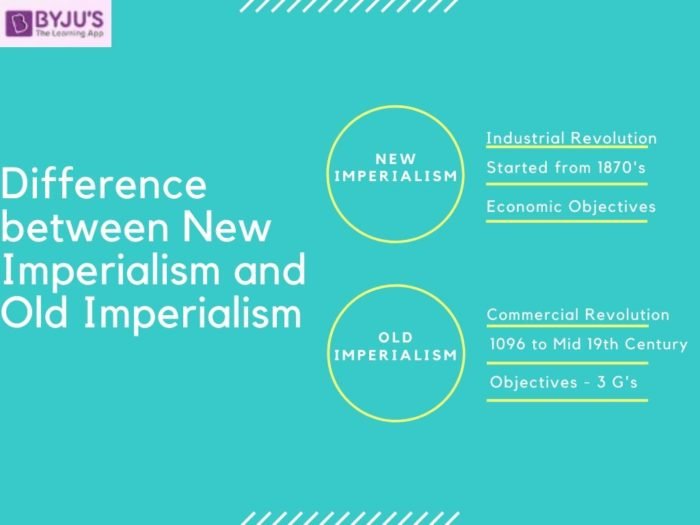
Old imperialism and new imperialism share several key similarities. Both eras were characterized by Western powers expanding their influence globally through colonization and exploitation. They both aimed to assert dominance over territories for economic gain and strategic control. The methods used in both old and new imperialism included military conquest, imposition of culture, and extraction of resources to benefit the imperial power. Despite occurring in different time periods, the core motivations and practices of old imperialism and new imperialism remain strikingly similar.

How Were Old Imperialism and New Imperialism Similar?
Welcome, young historians, to a fascinating journey through the annals of history. Today, we will delve into the captivating world of imperialism. You might have heard of terms like “old imperialism” and “new imperialism,” but have you ever wondered how they are similar? Let’s embark on this adventure together and uncover the connections between these two significant historical phenomena.
Understanding Imperialism
Before we delve into the similarities between old and new imperialism, let’s first understand what imperialism is all about. Imperialism refers to a policy of extending a country’s power and influence through colonization, use of military force, or other means. It often involves one country dominating another for economic, political, or strategic reasons.
Now that we have a basic understanding of imperialism, let’s explore how old imperialism and new imperialism share similarities despite occurring in different time periods.
Exploring Economic Motives
One significant similarity between old imperialism and new imperialism is the economic motives driving both phenomena. In old imperialism, which took place mainly during the 15th to 18th centuries, European powers such as Spain, Portugal, and the Netherlands sought to establish trade routes and acquire valuable resources like spices, silk, and gold from distant lands.
Similarly, in the era of new imperialism, which unfolded from the late 19th century to the early 20th century, European powers like Britain, France, and Germany pursued economic interests by exploiting the human and natural resources of colonies in Africa, Asia, and other regions. They established plantations, mines, and industries to extract wealth from these territories.
Whether in old or new imperialism, the quest for economic gain was a driving force behind the imperialist ambitions of powerful nations.
Imposing Cultural Hegemony
Another striking similarity between old imperialism and new imperialism is the imposition of cultural hegemony on the colonized peoples. In old imperialism, European powers often viewed the cultures of the lands they conquered as inferior and sought to impose their own customs, languages, and religions on the local populations.
Similarly, during the era of new imperialism, European colonizers justified their actions by claiming to bring civilization and progress to the “uncivilized” peoples of Africa, Asia, and other regions. They imposed Western education systems, legal systems, and cultural norms on the indigenous populations, undermining local traditions and identities in the process.
Thus, both old and new imperialism involved the cultural domination of colonized peoples in the name of progress and enlightenment, reflecting a common theme of paternalism and ethnocentrism.
Utilizing Military Power
One more key similarity between old imperialism and new imperialism lies in the use of military power to subjugate and control colonies. In old imperialism, European powers often relied on their superior military technology, such as firearms and warships, to conquer and maintain control over distant territories.
Similarly, in the era of new imperialism, European colonial powers utilized their advanced military capabilities, including machine guns, artillery, and naval forces, to crush resistance movements and assert their dominance over colonial territories. The use of force and violence was a common feature of both old and new imperialism.
By employing military might, imperialist powers sought to quash any challenges to their authority and maintain control over their colonies, perpetuating a cycle of oppression and subjugation.
Exploiting Natural Resources
Lastly, a significant similarity between old imperialism and new imperialism is the exploitation of natural resources in the colonized territories. In old imperialism, European powers plundered the riches of conquered lands, such as gold, silver, and spices, to fuel their own economic growth and enrich their monarchs and merchants.
Similarly, in the era of new imperialism, European colonial powers exploited the natural resources of their colonies on a massive scale. They established plantations for cash crops like rubber, cotton, and palm oil, extracted minerals and ores from mines, and exploited the labor of local populations to maximize their profits.
This ruthless exploitation of natural resources in both old and new imperialism led to environmental degradation, economic dependency, and social inequality in the colonized territories, highlighting a shared legacy of exploitation and resource depletion.
As we conclude our exploration of the similarities between old imperialism and new imperialism, we have uncovered several key parallels between these two historical phenomena. From economic motives and cultural hegemony to military power and resource exploitation, old and new imperialism share common features that shaped the course of history and influenced the destinies of nations and peoples around the world.
By understanding these similarities, we can gain valuable insights into the enduring legacy of imperialism and its impact on global politics, economics, and cultures. Let us continue to learn from the past and strive to build a more just and equitable world for all peoples, free from the shadows of imperialism’s dark history.
Thank you for joining me on this enlightening journey through the realms of imperial history. Until next time, keep exploring, keep learning, and keep questioning the narratives that shape our understanding of the world!
Second Wave IMPERIALISM, Explained [AP Euro Review—Unit 7 Topic 6]
Frequently Asked Questions
What are the similarities between old imperialism and new imperialism?
Both old imperialism and new imperialism involved the domination and control of foreign territories by more powerful nations. They aimed to exploit resources, expand markets, and exert political influence over the colonized regions. Additionally, both forms of imperialism resulted in cultural assimilation and the imposition of colonial rule.
How did economic motives drive both old and new imperialism?
Economic motives were a significant driving force behind both old and new imperialism. In both cases, imperial powers sought to acquire new sources of raw materials, expand markets for their goods, and establish control over strategic trade routes. This economic exploitation contributed to the wealth and power of the colonizing nations.
Were there similarities in the methods used to establish and maintain control in old and new imperialism?
Yes, there were similarities in the methods used to establish and maintain control in old and new imperialism. Military force, diplomatic manipulation, and economic coercion were common strategies employed by imperial powers in both eras. Furthermore, the establishment of administrative systems and the suppression of local resistance were key tactics used to ensure control over the colonized territories.
Final Thoughts
In summary, old imperialism and new imperialism were similar in their pursuit of territorial expansion and economic dominance. Both eras prioritized the exploitation of resources and indigenous populations for the benefit of the imperial powers. The desire for political control and the establishment of colonies were common aspects of both imperialistic endeavors. Ultimately, these similarities highlight how old imperialism and new imperialism shared the goal of asserting power and influence over global territories.
